June 23, 2026 · 2 min read
EU and Kazakhstan Sign Aviation Agreement: What It Changes for Business Travel to Europe
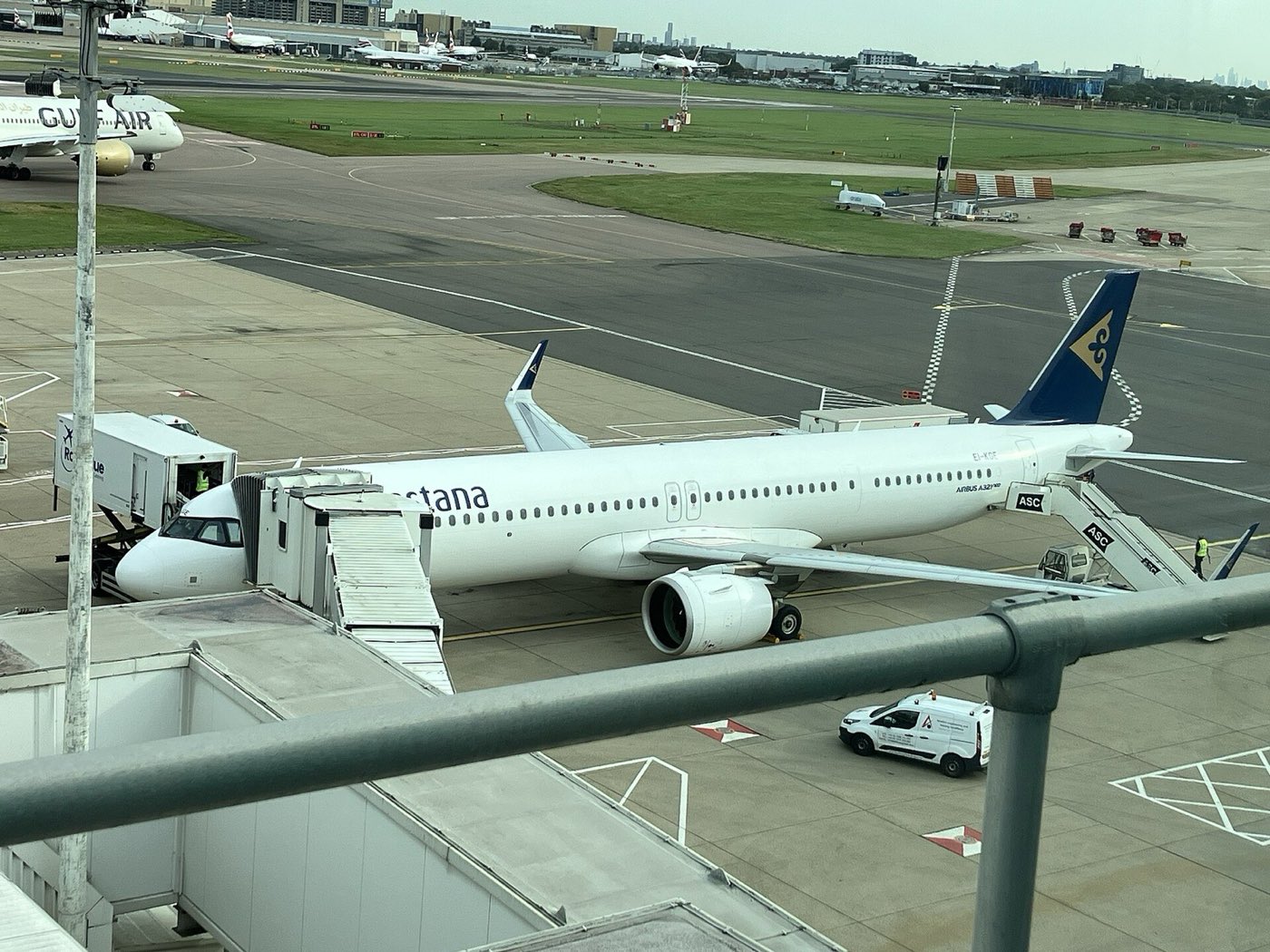
On June 23 in Brussels, the European Union and Kazakhstan signed a horizontal air transport agreement — a document that had been under negotiation for more than twenty years. For the business travel market this is a medium-term signal: European routes will see more competition, and with it, downward pressure on fares.
What exactly was signed. Until now, flights between Kazakhstan and a given EU country could mostly be operated only by airlines owned by nationals of that country or of Kazakhstan (the so-called carrier nationality rule). The new agreement removes this restriction: any EU airline will now be able to operate flights between Kazakhstan and any of the 17 EU member states that already have bilateral air service agreements with Kazakhstan.
The 17 countries are: Austria, Belgium, Bulgaria, Hungary, Germany, Denmark, Cyprus, Latvia, Lithuania, Luxembourg, the Netherlands, Poland, Finland, France, the Czech Republic, Sweden and Estonia.
The agreement was signed by European Commissioner for Transport Apostolos Tzitzikostas and Kazakhstan’s Minister of Transport Nurlan Sauranbayev in the presence of the heads of the European Commission and the European Council. It is part of a larger package: alongside the aviation agreement, Brussels also saw a 150 million euro framework loan agreed for the Trans-Caspian Corridor and an Air Astana contract with Airbus for at least 25 aircraft.
What this means for travel managers. Lifting the carrier nationality restriction opens the door to new players on routes such as Almaty and Astana to Frankfurt, Vienna, Amsterdam and Warsaw. More carriers means more competition, pressure on prices and a broader schedule. The effect will not be immediate: airlines need time to secure slots and approvals. But when planning the 2027 budget, it is reasonable to assume softer fare dynamics on European corridors and to keep an eye out for new brands entering the market.
In parallel, it is worth tracking the EU–Kazakhstan negotiations on visa facilitation for Kazakhstani citizens. If an agreement is reached, arranging visas for employees on business trips across Europe will become procedurally simpler — the second half of the “access to Europe” equation.
Planning European business trips this season? Save this post — we will come back to the topic once the first flights by new carriers appear on the corridor.